%201.png)
How a Septic System Actually Works: A Simple Guide for Homeowners
.png)
If your home runs on a septic system, you rely on it every single day without ever seeing it work. Most homeowners never give it a thought until something goes wrong. A little understanding goes a long way, so here is a simple, plain English guide to how a septic system actually works and what keeps it running for decades.
The Two Main Parts
Almost every septic system comes down to two pieces working together:
- The septic tank. A large, watertight container buried in your yard, usually concrete or heavy plastic. This is where wastewater first collects and begins to separate.
- The drain field. Also called a leach field, this is a network of perforated pipes laid in gravel filled trenches. It is where treated water returns safely to the soil.
Everything that leaves your sinks, showers, toilets, and laundry flows to the tank first, then out to the drain field.
What Happens Inside The Tank
When wastewater enters the tank, gravity and time do the first round of work. The contents naturally separate into three layers:
- Scum floats on top. This is the lighter material like oils and grease.
- Effluent is the relatively clear liquid in the middle. This is the part that moves on to the drain field.
- Sludge settles to the bottom. These are the heavy solids.
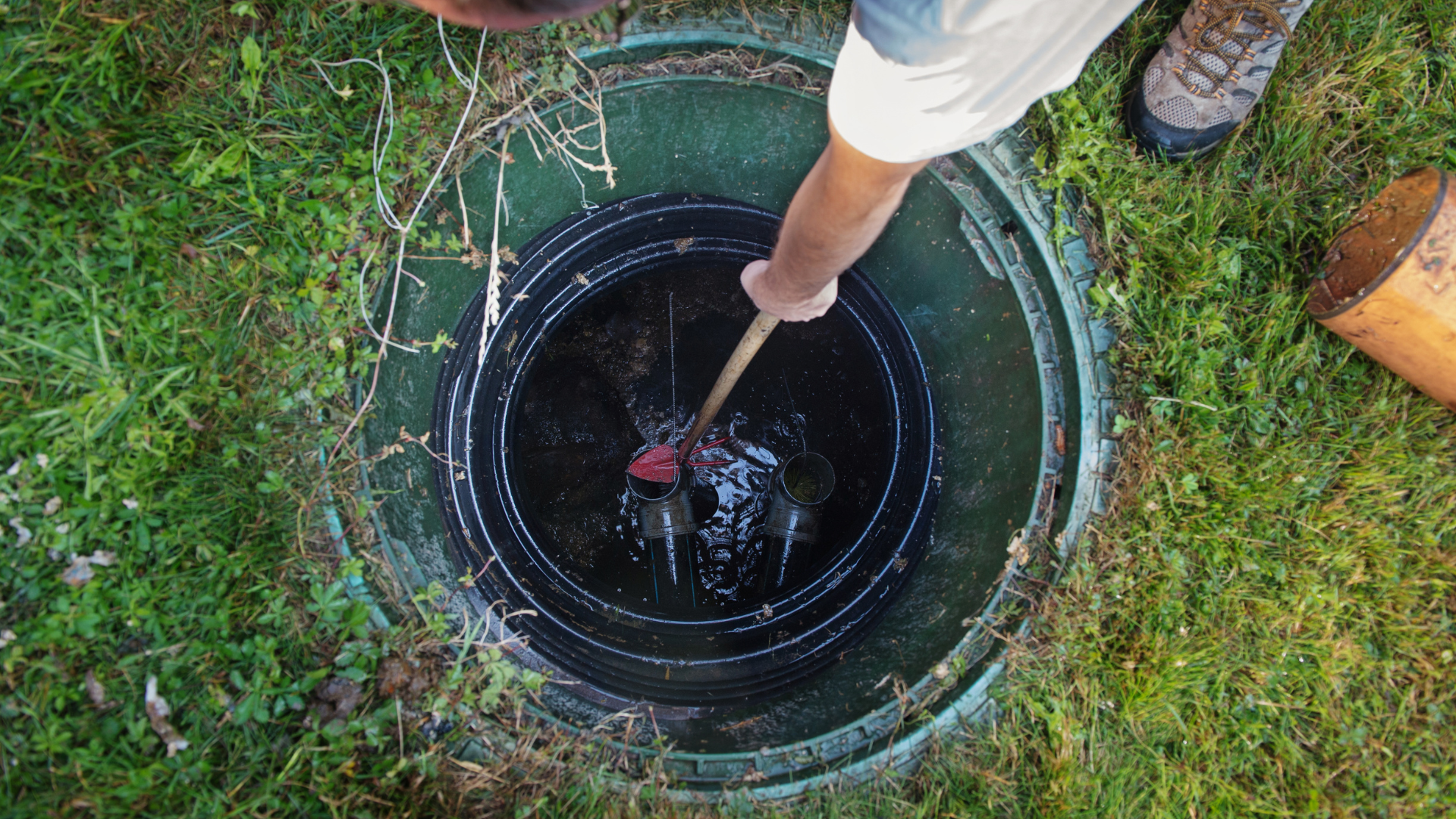
Inside the tank, natural bacteria go to work breaking down the solids. They cannot break down everything, which is why sludge slowly builds up over time. A baffle or outlet filter at the tank's exit keeps scum and solids from escaping, so only the clearer effluent flows out.
Where The Drain Field Comes In
The effluent leaves the tank and flows into the drain field, where the real filtering happens. As the water trickles through the perforated pipes, the gravel, and finally the soil, it is naturally cleaned. Bacteria in the soil remove harmful material, and clean water rejoins the groundwater below. The EPA's overview of how septic systems work breaks this process down further. A healthy drain field is the part of your system doing the heavy lifting of treatment.
Why The System Needs Maintenance
Here is the catch. The bacteria in your tank break down solids, but not all of them. Over the years, sludge and scum keep building until they reach a level where they can flow out toward the drain field. If solids reach the drain field, they clog it, and a clogged drain field often has to be replaced.
That is why pumping the tank on a regular schedule matters so much. A septic pump out removes the built up sludge and scum before they can cause damage. For most Florida homes, that means pumping every 2 to 4 years. You can read more in our guide on how often to pump a septic tank in Florida.
Keeping Your System Healthy
A few simple habits protect the whole system:
- Pump the tank on schedule and have it inspected during each visit.
- Be mindful of what goes down the drain. Grease, wipes, and harsh chemicals all work against the bacteria your tank depends on.
- Spread out heavy water use so you do not overload the system in a single day.
- Keep vehicles and heavy equipment off the drain field.
A regular septic inspection is the easiest way to catch small issues early, before they turn into costly repairs.
Questions About Your System?
Mullis Septic helps homeowners across Jacksonville and Northeast Florida understand and care for their septic systems, from routine pump outs to new installations. If you are not sure how your system is doing, reach out to our team and we will help you make a plan.
Are you in need of Septic Services?
.png)