Most household septic tanks are pumped every 3 to 5 years, and inspected at least every 3 years. Your actual interval depends on four things: tank size, how many people live in the house, total water use, and how many solids you send down the drain. The only precise answer comes from measuring sludge and scum depth in your own tank.
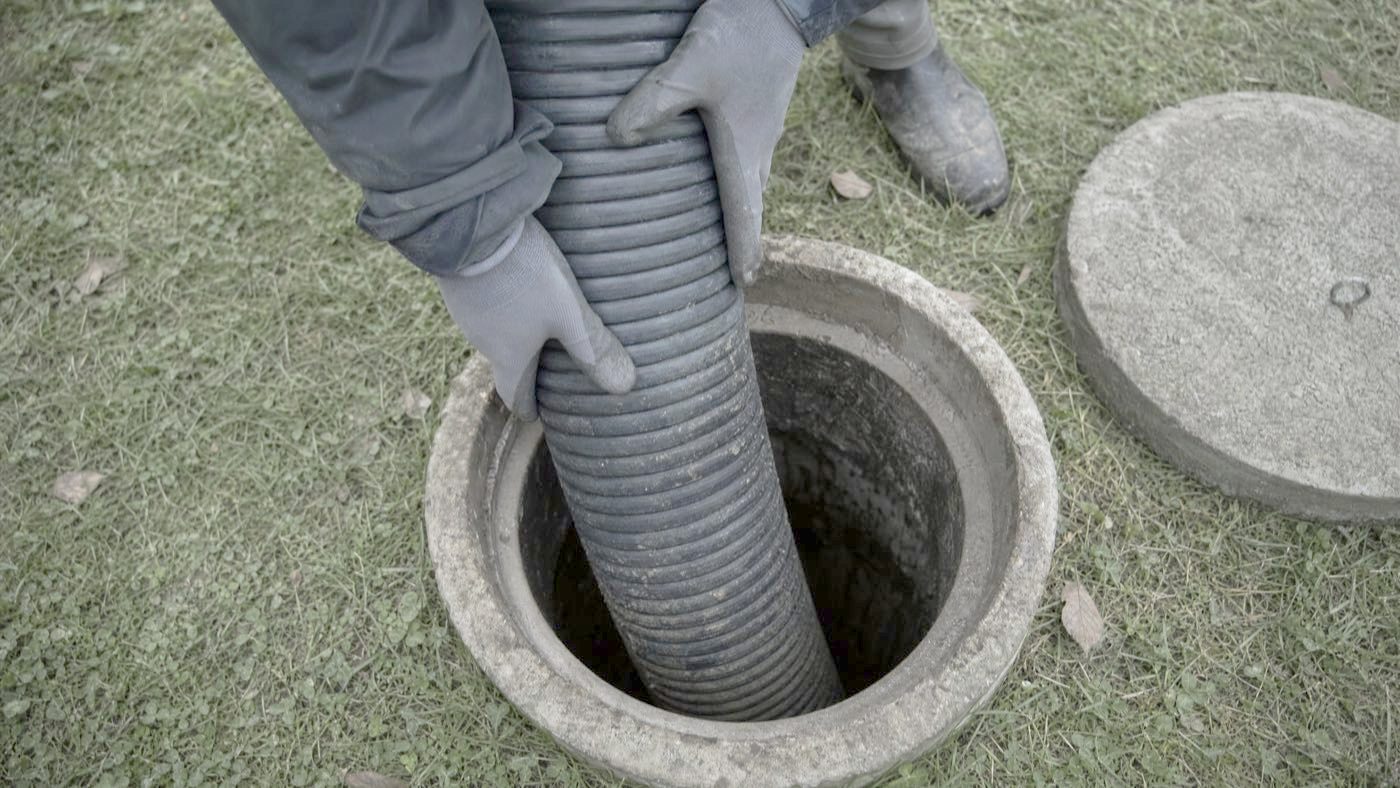
Pumping is preventive work, not a repair. You are removing accumulated sludge and scum before they get deep enough to escape the outlet tee and reach the drainfield, because once solids land in the trenches there is no pumping them back out.
So the question is not really how often. It is how fast your tank fills with the material that will not break down, and that rate is set by your household, not by a calendar.
The four things that actually set your interval
Tank size is the first. A 900 gallon tank serving four people fills its solids budget considerably faster than a 1,250 gallon tank serving the same four people, because the clear middle band gets squeezed sooner. Occupancy is the second, and it is the one that changes most: a house that went from two adults to two adults and three teenagers did not get a smaller tank, it got a shorter interval.
Total water volume is the third. Every gallon that enters shortens the settling time available to the gallon ahead of it, so long showers, a running toilet flapper, or five loads of laundry on Saturday all push solids toward the outlet before they have settled. The fourth is the character of the solids themselves. A garbage disposal, heavy grease habits, and anything fibrous will build sludge far faster than a household that puts food scraps in the trash.
The honest measurement
The trade does not guess at this, and neither should you. With the lid open we measure two things: the depth of the sludge blanket on the bottom and the thickness of the scum mat on top. The working guideline most extension guidance uses is to pump when sludge and scum together occupy roughly a third of the tank's liquid volume, or when the top of the sludge comes within about a foot of the bottom of the outlet tee, or when the scum mat comes within about 3 inches of it.
That measurement is what converts a generic interval into your interval. Measure twice, a few years apart, and you know your household's accumulation rate for good. After that, the calendar takes care of itself. A tank that measures clean is a tank that does not need pumping today, and we will tell you that.
What is different about Northeast Florida
Two local conditions matter. The first is the seasonal water table. Through the summer rainy season, ground around many systems in Duval, Clay, Nassau and the coastal parts of St. Johns stays wet, the soil under the trenches loses its ability to accept water, and a system that behaved perfectly in April starts backing up in August. Pumping relieves that, but only because it buys empty volume, not because it fixed anything.
The second is aerobic treatment units and other engineered systems, which have pumps, blowers or filters and need scheduled service on their own terms, generally at least annually. If you have one of those, the pumping question is the smaller half of your maintenance plan. Florida does not impose a fixed statewide homeowner pumping schedule, though local requirements can differ.
If we open your lid, measure, and find the sludge blanket well below the outlet tee, we will say so and you can put the truck off for another year or two. Selling a pump out to a tank that does not need one is easy money and bad work. On cost, the drivers are tank size, how deep the lid is buried, whether risers were installed, how far the truck can get from the tank, and how compacted the sludge has become. We will not put a number on any of that without seeing the system.
Questions
Related questions
How long does a pump out take?
Should both compartments be pumped?
Does a garbage disposal really change anything?
We are only here part of the year. Does that stretch the interval?
Standing water does not wait
Tell us what is happening
Calling is faster than a form, and you get somebody who can ask the follow up question that actually narrows it down.