Plant shallow rooted turfgrass or low herbaceous perennials over a drainfield, keep trees and large shrubs well clear, and never cover the field with mulch, plastic, landscape fabric or added topsoil. Do not drive, park or build over it. UF/IFAS guidance also advises against vegetable gardens over a drainfield and keeping irrigation spray at least 10 feet away.
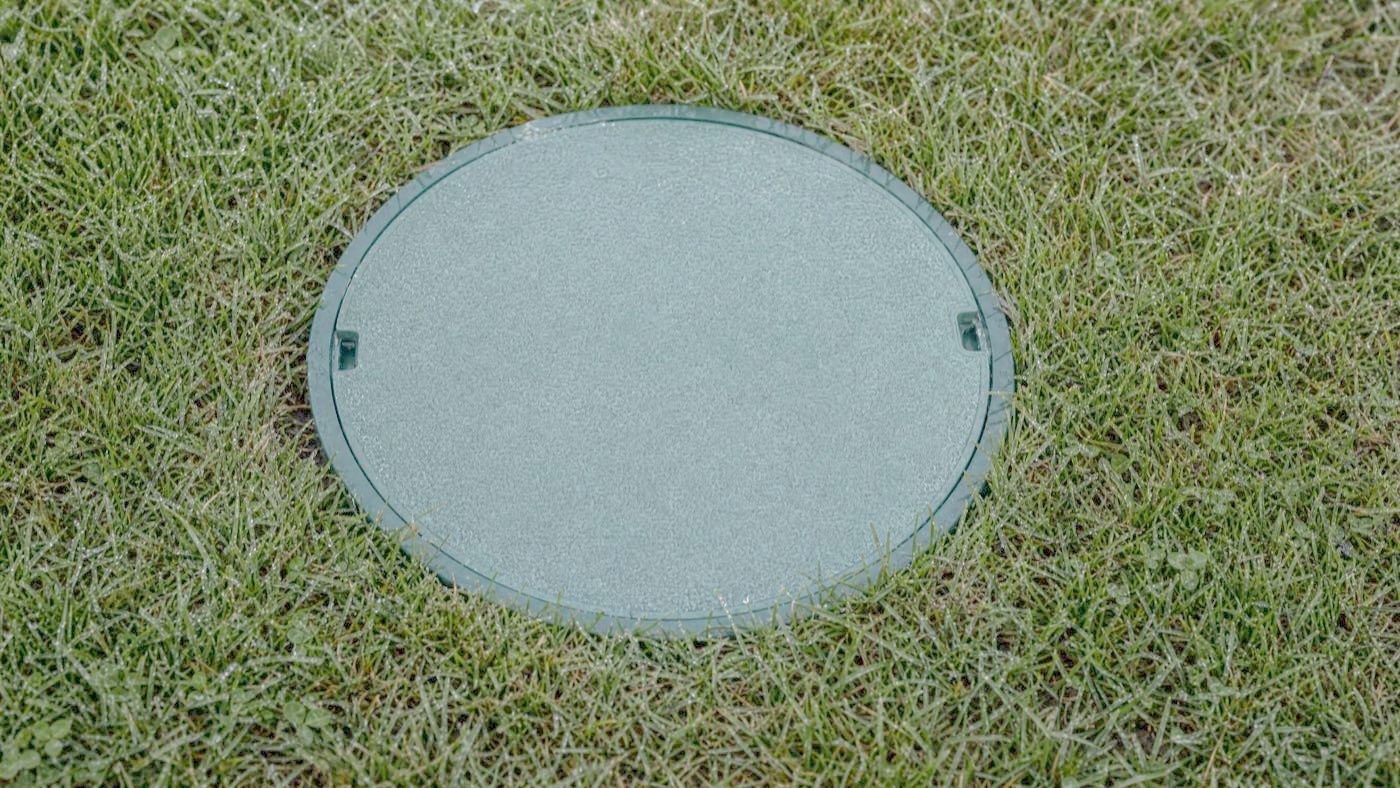
The drainfield is not a pipe that carries water away. It is a shallow soil treatment system, and the soil above it is part of the machine. Effluent trickles out into unsaturated soil where aerobic bacteria break down what is left, and the field sheds its water load partly by moving it up through plant roots and out through the surface. That process needs oxygen exchange at the surface and it needs to dry between doses.
Everything on this page follows from that one fact. If you seal the surface, saturate it, compact it, or fill it with aggressive roots, you are not decorating over the field. You are interfering with the treatment.
The field has to breathe and it has to dry
UF/IFAS extension guidance on landscaping over drainfields is blunt about coverings, and it is blunt for a mechanical reason: plastic sheeting, landscape fabric, rock mulch and bark mulch all reduce oxygen exchange and slow evaporation from the surface. So do added topsoil and raised beds, which additionally bury the field deeper than it was designed to sit. Leave the surface as it is.
The same reasoning rules out tilling, and rules out digging deeper than about six inches anywhere over the field. Drainfield laterals and chambers are shallow by design, and a garden fork, an edger blade or a post hole for a fence panel reaches them easily. What the homeowner sees afterward is usually nothing at all for a few months, then a wet stripe. By then the damage is not a shovel problem anymore.
One more surface rule that has nothing to do with plants: keep gutter downspouts, roof drains, French drains and sump pump discharge pointed away from the field. The field already has a full water budget from inside the house. Adding a roof to it is a real cause of failure.
What you can actually plant
Turfgrass is the correct default, and it is not a compromise. St. Augustine, bahia, zoysia and bermuda all root shallowly, cover the surface, and pull water out of the field through transpiration, which is exactly what you want happening up there. If you do nothing else with the area, keep it in grass and keep it mowed.
If you want something with more shape to it, UF/IFAS points toward shallow rooted herbaceous plants: fountain grass, iris, agapanthus, milkweed, aster, plumbago and pink muhly grass are all workable choices. What is not workable is anything woody. No trees and no large shrubs over the field, and be careful about aggressive spreaders like bamboo and pampas grass, whose root systems will find a lateral and colonize it. Roots go where the water is, and your drainfield is the wettest, richest thing in the yard.
Distance from existing trees is measured wrong by almost everyone. Tree roots commonly extend two to three times the width of the canopy, so measure from the drip line and not from the trunk, and give large canopy species considerably more room than feels necessary. Also keep irrigation spray at least 10 feet off the field, and skip the vegetable garden: UF/IFAS advises against food crops over a drainfield because of pathogen contact and the extra nutrient loading fertilizer adds.
Driving, parking and building
Soil treats wastewater because it has pore space, and compaction is the permanent removal of pore space. A vehicle parked on the field squeezes the soil structure closed, and once the pores collapse the soil cannot move air or accept water at the rate the system was designed around. Repeated traffic also cracks laterals, crushes chambers, and breaks tank lids, which is a genuinely dangerous failure and not just an expensive one.
The list of things we see on top of drainfields is longer than you would think: work trucks, boat and utility trailers, dumpsters and roll-off containers during a remodel, portable toilets, concrete trucks, storage pods, above ground pools, trampolines, sheds, decks, paver patios and fire pits. Any of those is a problem, and the temporary ones are worse than the permanent ones because nobody thinks to warn the contractor. If you are having any work done at the house, tell every trade where your field is before they pull in.
The symptom you eventually see is a soft or spongy strip underfoot, a stripe of unusually green grass tracking a lateral line, or odor after heavy rain. Those are not early warnings. They are the field telling you it has already been failing for a while.
We can cut roots out of a line and we can usually tell you which tree is responsible, but roots regrow, and if a mature oak sits inside your field the honest answer is that you are eventually choosing between the tree and the drainfield. We are not going to come back every eighteen months to cut the same roots and call it a maintenance plan. We also do not remove trees, regrade yards or replant beds, so an arborist or landscaper handles that half of the fix.
Questions
Related questions
Can I put a shed or an above ground pool over the drainfield?
What about gravel or pavers so I can park there?
There is a live oak about 25 feet from my field. Is that a problem?
Can I run an irrigation zone across it?
Standing water does not wait
Tell us what is happening
Calling is faster than a form, and you get somebody who can ask the follow up question that actually narrows it down.