Septic pumping cost in Northeast Florida is driven by tank capacity (most Florida homes sit on a 900 to 1,200 gallon tank), how deeply the access lid is buried, how far the truck can park from the tank, and how much compacted sludge has built up since the last service. We do not publish a price, because a published price is a quote given blind.
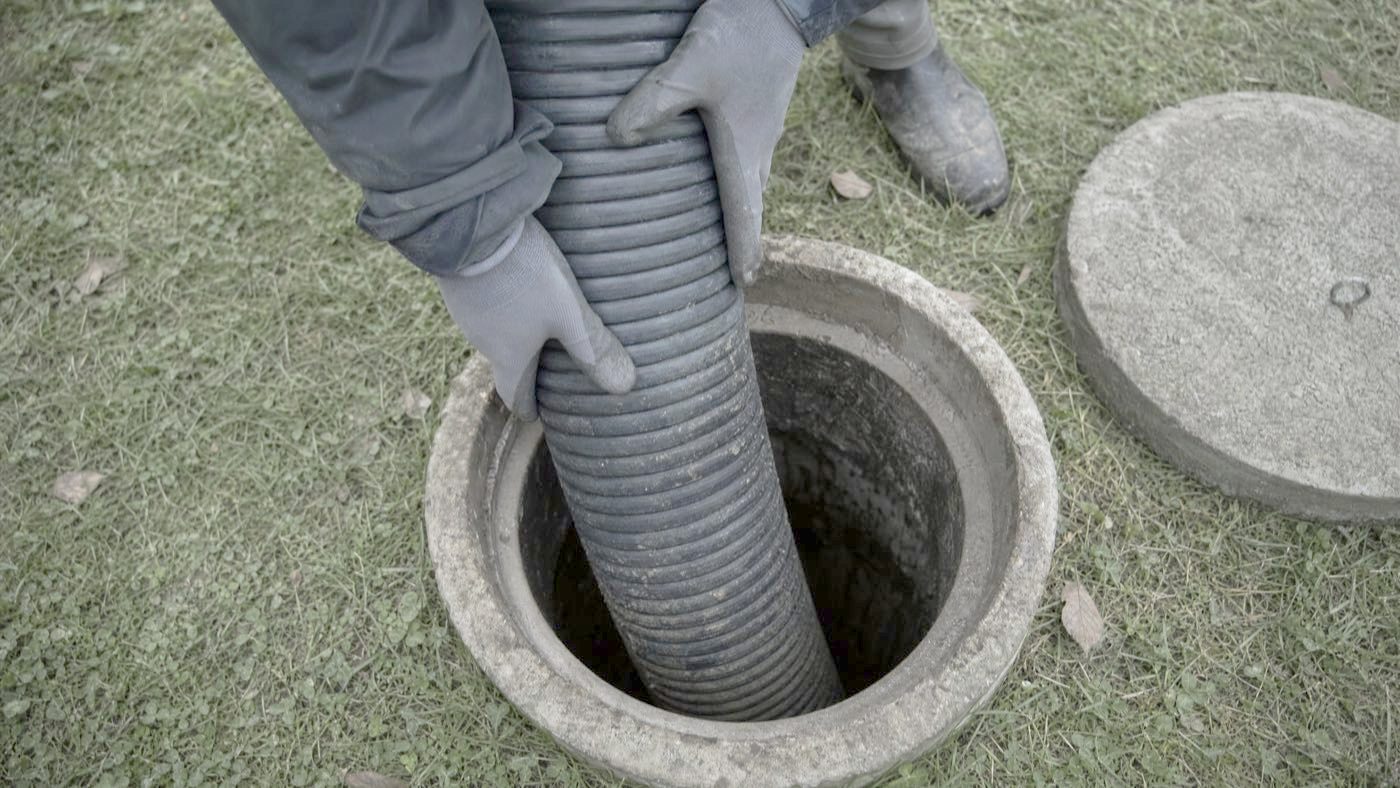
A septic tank is a settling chamber, nothing more clever than that. Wastewater comes in, grease and light solids float to the top as a scum layer, heavy solids drop to the bottom as sludge, and the relatively clear liquid in the middle flows out to the drainfield. Pumping is the removal of the two layers you cannot see. That is the whole service.
So the price of a pump-out is really the price of getting a truck to your tank, getting the lid open, and getting a measured volume of accumulated solids out of it and legally disposed of. All three of those vary house to house across Duval, Clay, St. Johns, Nassau, Baker, Putnam and Bradford counties. Which is why the ranges you find online are close to useless for your address.
What actually moves the price
Tank capacity is the first lever, because you are paying to haul and dispose of a volume of septage, and a 1,200 gallon tank holds a third more than a 900 gallon tank. Florida sizes tanks by bedroom count and building area, so a four bedroom house usually has a larger tank than a two bedroom house on the same street. Bigger tank, more volume, higher cost. That part is simple.
The second lever is time since the last service, and it matters more than most people expect. Sludge that has sat undisturbed for a decade loses water and compacts into something closer to wet clay than to liquid, and it has to be broken up and slurried before a vacuum hose will move it. Two tanks of identical size can take twenty minutes or ninety minutes on that difference alone. Time on site is cost.
Two-compartment tanks, pump chambers and aerobic treatment units add work too, because every chamber has to be opened and emptied rather than just the first one. If a company pumps only the first compartment, you paid for half a job.
Access is the variable homeowners forget
Every pump truck carries a finite length of hose, and effluent will only lift so far, so the distance and grade between where the truck can legally park and where the tank actually sits is a real input. A tank twenty feet off the driveway is a different job from a tank a hundred and fifty feet into a fenced back yard behind a gate the truck cannot fit through. Distance costs money.
The other half of access is the lid. Tanks installed before risers became common are often buried under six to eighteen inches of soil, sod or landscaping, and that has to be located and hand dug before anything else happens. If your lid is buried, expect a locate and dig line on the invoice. If you have a riser at grade, expect not to see one.
This is the one variable you can permanently remove. A riser brings the access lid up to ground level so every future service call skips the digging, and on a system you plan to keep for years it usually pays for itself.
What pumping does not include, and does not fix
A pump-out empties the tank. It does not repair the tank, and this is where our industry earns its reputation, because the easiest upsell in the world is a list of findings delivered over an open lid. Some of that list is genuinely worth doing: a missing outlet baffle or tee lets scum and solids run straight into the drainfield, and an effluent filter packed solid will back the house up within days of being ignored. Those are cheap to address while the tank is already open.
What pumping will not do is fix a saturated drainfield. If your yard is soggy, your drains have been slow for months, or the tank was full to the inlet pipe when we lifted the lid, the tank was never the problem, and it will refill to that same level in a week or two. Pumping in that situation buys you days, not a repair. We would rather tell you that before we pump than after.
A published price is a quote, and a quote made without seeing your tank, your lid depth, your access route and your service history is a guess that either overcharges you or gets revised in your driveway. Neither is acceptable to us. We price a pump-out once we know what we are pumping, and if what you actually have is a drainfield problem, we will say so and you are free to send us away.
Questions
Related questions
How often should I have my tank pumped?
Does a fuller tank cost more?
Will a tank additive let me skip pumping?
Can you give me a firm price over the phone?
Standing water does not wait
Tell us what is happening
Calling is faster than a form, and you get somebody who can ask the follow up question that actually narrows it down.