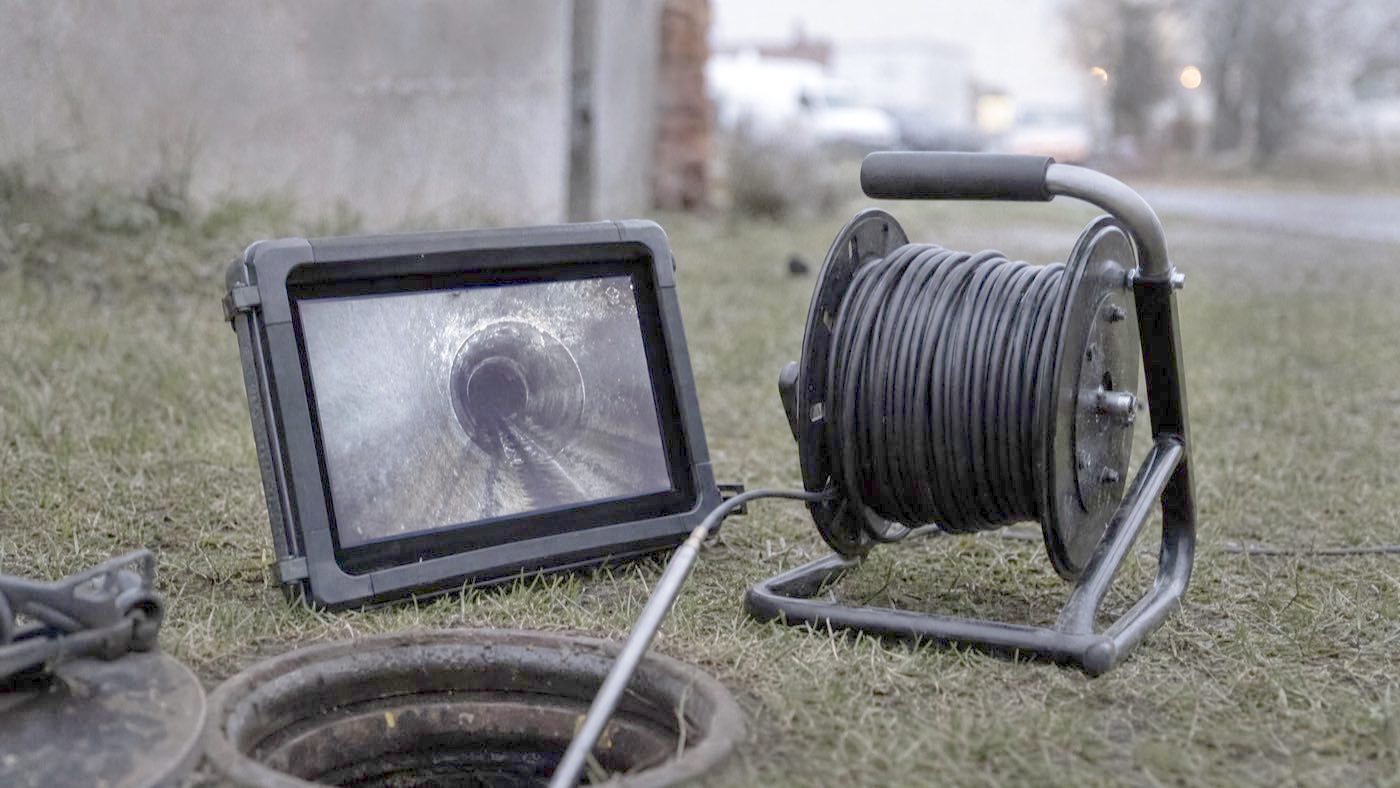
Between the house and the tank, and between the tank and the field, there are runs of pipe that nobody can assess from the surface. Roots, bellies, offsets, crushed sections and partial collapses all produce the same symptoms as a failing drainfield.
The difference in cost between those two diagnoses is enormous, which is exactly why we would rather look than infer.
- The line seen rather than guessed at
- Root intrusion, bellies and breaks identified and located
- Findings explained while you watch, not just summarised afterwards
- Used before we recommend anything expensive
A five figure quote from somebody who never looked is an estimate of a guess.
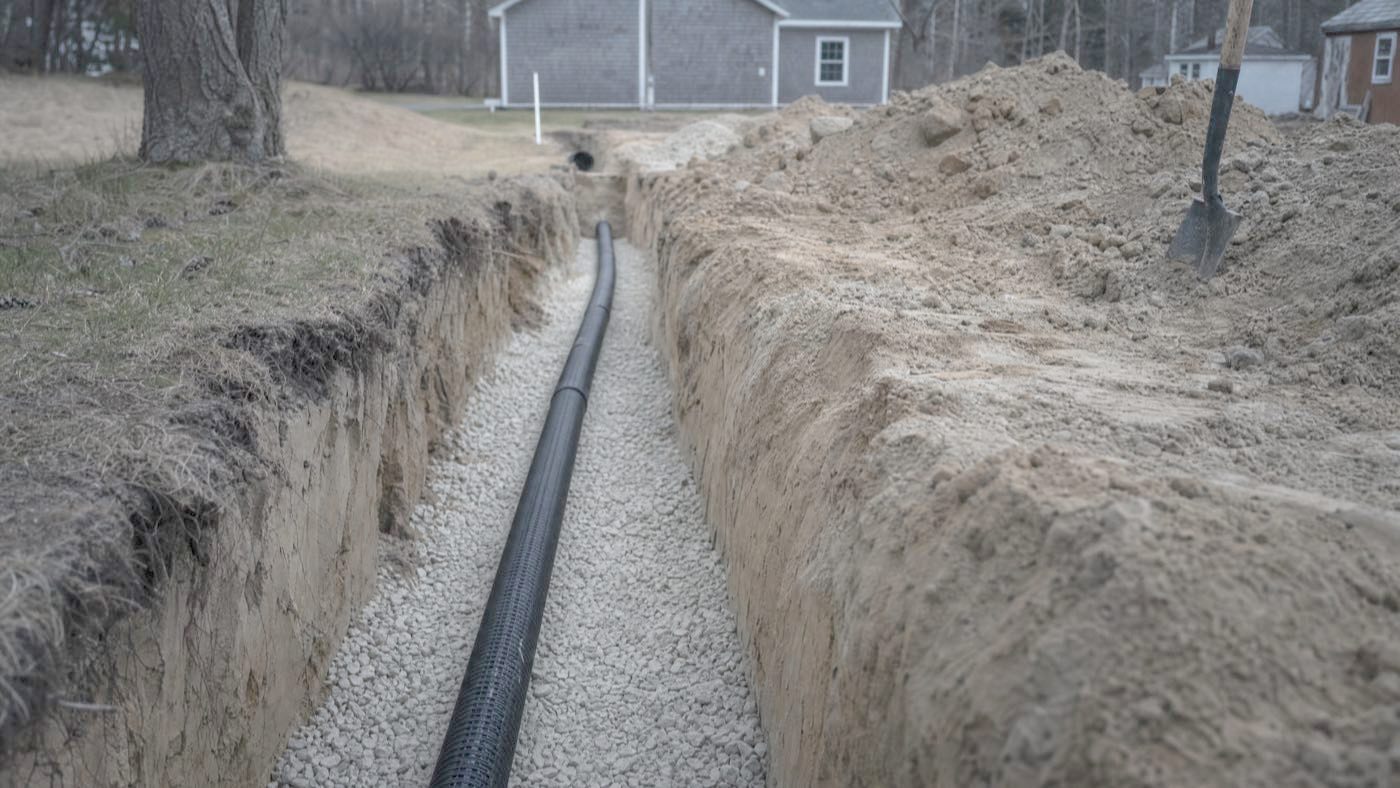
What the camera actually settles
Whether the problem is in the line or in the ground. That single question determines whether you are looking at a repair measured in feet of pipe or a project measured in permits.
It also locates the fault, which means excavation happens in one place rather than across the yard.
When it is worth doing
Before accepting any drainfield replacement quote, without exception. After repeated backups that pumping does not resolve. And during a purchase inspection where the line's age or condition is unknown.
If somebody has quoted you a five figure job without putting a camera down the line, that quote is an estimate of a guess.
It tells you what is happening inside the pipe, which is often the whole answer and sometimes only half of it. Where the question is whether the ground still accepts water, the camera has to be paired with tank levels and a look at the field. We will use both rather than overselling one.
What affects a camera inspection
Access to the line, the length of the run, and whether the line has to be cleared before a camera can read it. A wall coated in years of build-up is not a readable wall.
We do not publish a number for it, because a published price is a quote given without seeing the system.
The visit
What actually happens
Access the line
Usually through the tank or a cleanout.
Run the camera
The full run, not just the first few feet.
Locate any fault
So digging happens once, in the right place.
Show you
You should see what we saw before deciding anything.
When the camera will not help
The camera tells you what is happening inside the pipe. Where the real question is whether the ground still accepts water, it has to be paired with tank levels and a look at the field, and on its own it will not settle the question.
If the problem is clearly a full tank, pump it first. Then look.
Questions
Camera Inspection questions we get
Do I need a camera inspection before a drainfield replacement?
Can the camera go through the tank?
Will I get to see the footage?
Related
You might also need
In their words
What customers say
Mullis Septic saved the day! They came out within hours of my call. Professional, polite, and explained everything clearly.
Honest pricing and fast service. It's hard to find reliable contractors these days, but these guys are the real deal.
Highly recommended. They handled our new installation smoothly from permits to final cover-up.
Standing water does not wait
Tell us what is happening
Calling is faster than a form, and you get somebody who can ask the follow up question that actually narrows it down.