Heavy rain raises the water table until the soil around your drainfield is already full of water and cannot accept any more, so your wastewater has nowhere to go and backs up toward the house. That is usually a groundwater problem, not a tank problem. Do not pump the tank while the ground is saturated: an empty tank can float out of the ground and break its connections.
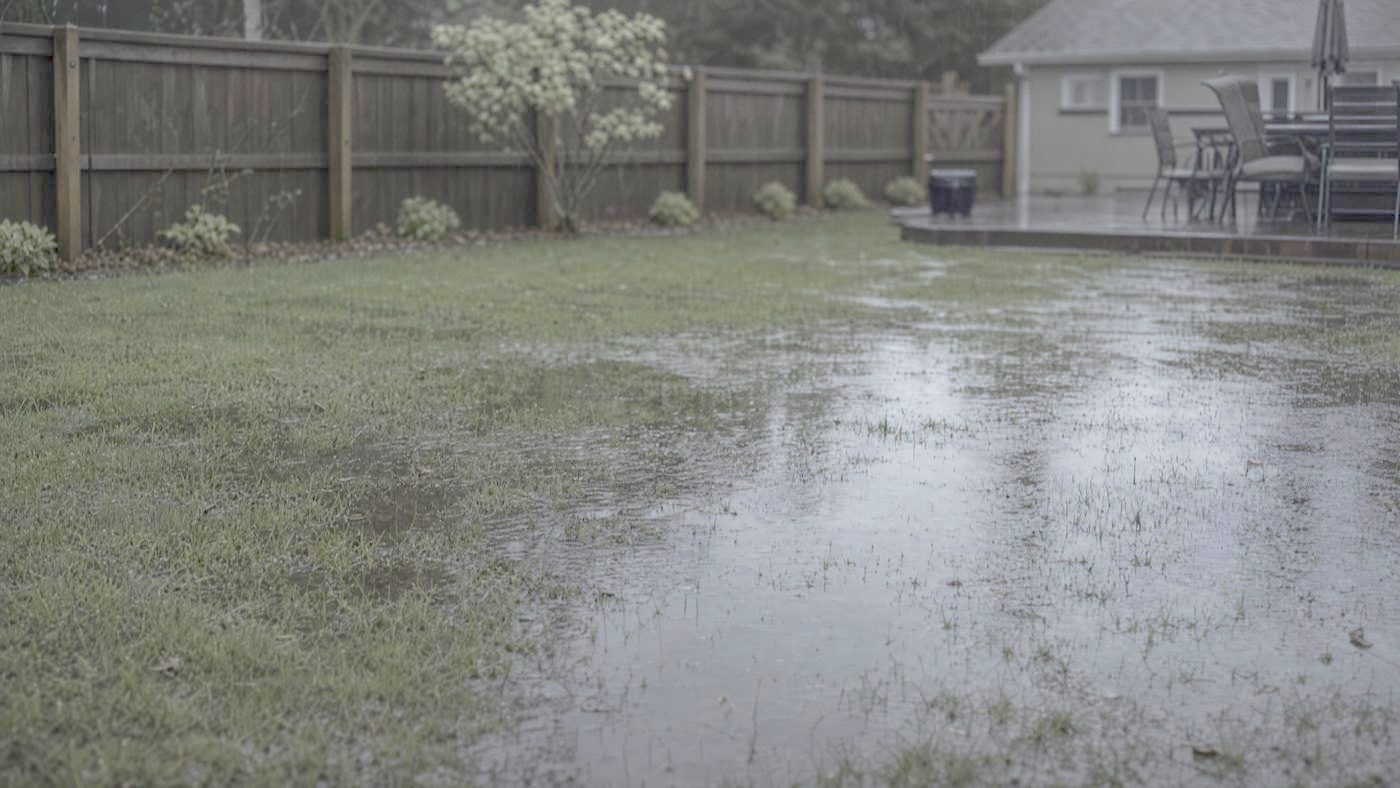
A septic system does not dispose of your wastewater so much as hand it off to the soil, and the soil can only take it if there is unsaturated ground under the drainfield. University of Florida IFAS extension guidance puts the working number at roughly two feet of unsaturated soil below the trenches for treatment to happen. When the wet season pushes the water table into that zone, the soil is already holding all the water it can.
This is the most common call we take from June through September, and the frustrating part is that nothing is technically wrong. The tank is fine. The pipe is fine. The ground is the problem, and the ground fixes itself when it drains.
Why Rain Backs Up a System That Was Fine Last Week
Effluent leaves your tank into the drainfield trenches, where it seeps through air pockets in the soil. Those pockets do the treatment and give the water somewhere to go. After days of rain, or one tropical system dumping several inches, they fill with groundwater and the trench has nothing to drain into. Inside the house you get slow drains, a gurgle in the tub when the washer empties, or a toilet that will not clear. Outside you get a soggy or unusually green strip over the drainfield, sometimes with standing water or odor.
Those symptoms look identical to a failing drainfield, which is why this season generates so much unnecessary replacement work. The honest test is time: a system that is only overwhelmed by groundwater recovers within a few days of the water table dropping, while a genuinely failed one stays backed up through a dry stretch. If yours recovers every time the rain stops, the drainfield is probably marginal and worth evaluating in a dry month. If it never recovers, that is a different conversation.
Why We Will Not Pump Your Tank While the Ground Is Saturated
A septic tank is a watertight box buried in the ground, and when it is full of liquid its weight roughly balances the soil and water pressing in on it. Empty it while the surrounding ground is saturated and you have a sealed air-filled container sitting in what is effectively mud and water. Buoyancy does the rest. The tank can lift, shift, or float, and when it moves it snaps the inlet and outlet connections, turning a temporary inconvenience into a real excavation. UF IFAS extension guidance is explicit that you should not open or pump a tank while soil is still waterlogged, both for that reason and because mud and silt get pulled into an opened tank.
There is a second reason pumping does nothing here. If the drainfield cannot accept water, an empty tank refills from your own household use and from groundwater seeping in, and you are back where you started in a day or two. We get asked for rainy season pump-outs constantly and we turn a lot of them down. We would rather tell you to wait than sell you a truck visit that undoes itself by Thursday.
What To Do While You Wait for the Ground To Drain
Cut water use hard, because everything down a drain has to go somewhere and right now there is nowhere. Short showers, laundry held or spread across days, no dishwasher runs you can avoid. If you are mopping up water inside, carry it outside rather than dumping it in a sink, because that is water your system did not create and cannot handle. Keep vehicles and equipment off the drainfield: saturated soil compacts easily, and compacted soil never drains the same again.
Watch what your gutters and downspouts do while it is actually raining, since a downspout discharging near the drainfield adds hundreds of gallons on top of a water table that is already too high. Redirecting that runoff is cheap, and it is often the only permanent fix a marginal system needs. If sewage is surfacing in the yard or backing into the house, keep people and pets off it, stop using water, and call us. Standing sewage is a health issue, not a wait-and-see issue.
We can pump a tank, jet a line, and dig up a drainfield, but we cannot lower the water table under your property and nobody else can either. If your system is sitting under standing water, no service we sell makes it work today. The honest answer is to stop using water and wait, and we will tell you that on the phone rather than send a truck. If you want someone to look anyway, know that we may charge you for a visit that ends in the same advice.
Questions
Related questions
My toilets back up every time it rains hard but clear up after. Is my drainfield failed?
Should I pump my tank right after a flood?
How long does the ground take to drain after heavy rain in Northeast Florida?
What does it cost to deal with a rain-related backup?
Standing water does not wait
Tell us what is happening
Calling is faster than a form, and you get somebody who can ask the follow up question that actually narrows it down.