Florida HB 1379, passed in 2023, requires an enhanced nutrient-reducing onsite system (ENR-OSTDS) instead of a conventional septic system for new systems on lots of one acre or less inside designated impaired-basin areas where sewer is not available. Much of Duval, Clay, St. Johns and Putnam falls within the Lower St. Johns River basin management area. Whether it applies to your specific parcel has to be confirmed at permitting.
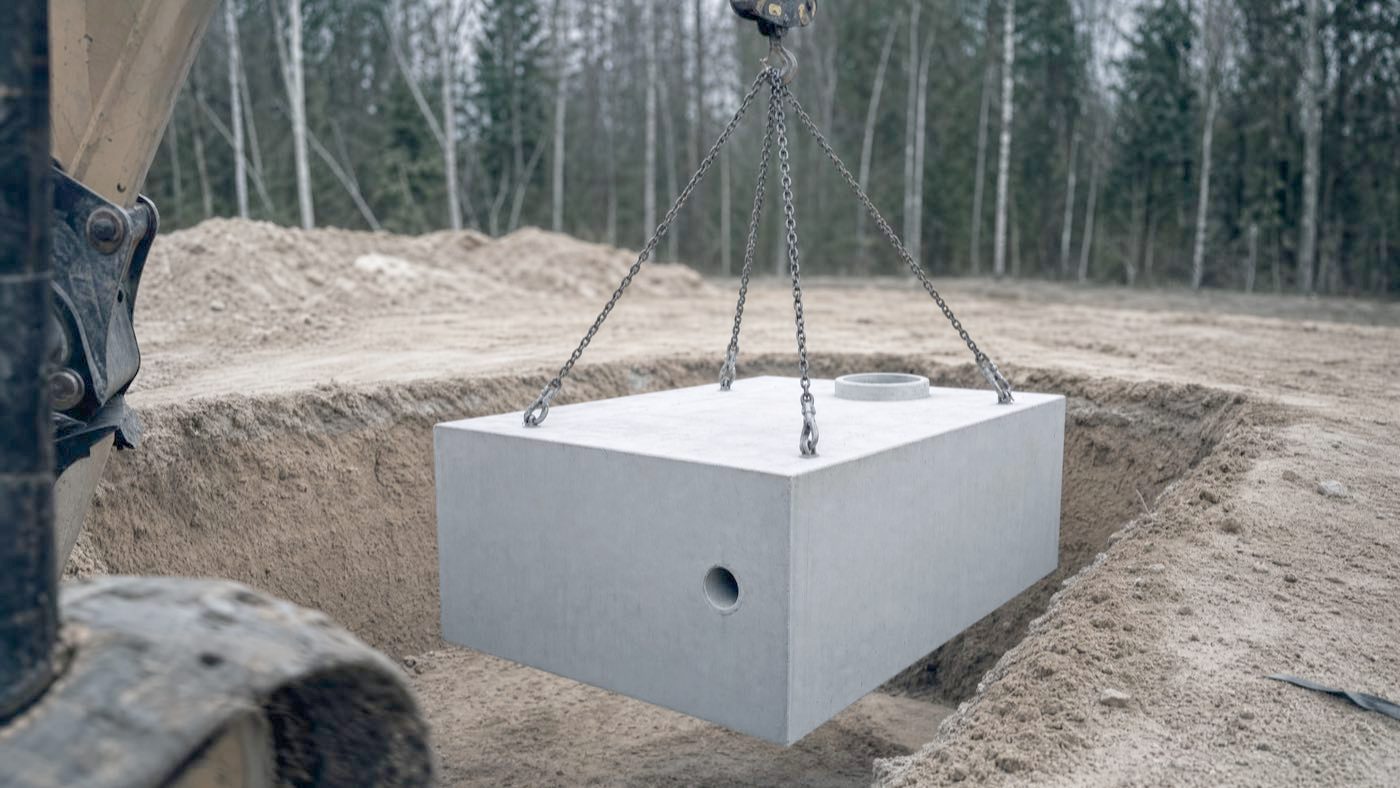
Nitrogen is the reason this law exists. A conventional septic system is very good at removing solids and pathogens and comparatively poor at removing nitrogen, so nitrate travels with the effluent down through the soil into groundwater, and groundwater around here ends up in creeks and the St. Johns. Where a waterbody is already impaired by nutrients, the state writes a Basin Management Action Plan to cut the load, and onsite sewage is one of the sources those plans target.
HB 1379 (2023) turned that from a planning document into a permitting requirement. The practical version: in impacted areas, a new septic system on a small lot has to be an enhanced nutrient-reducing system rather than a conventional tank and drainfield.
What the Law Actually Requires
As we understand the current rule, applicants for new onsite systems in impacted areas serving lots of one acre or less must install an enhanced nutrient-reducing onsite sewage treatment and disposal system (ENR-OSTDS, or just nitrogen-reducing system) when sewer is not available. These are held to a nitrogen reduction standard rather than a specific design, and the approved routes generally include NSF 245 certified aerobic treatment units, nitrogen-reducing performance-based treatment systems, and in-ground nitrogen-reducing biofilters.
Impacted areas are not limited to BMAP boundaries alone. The requirement has been described as applying in BMAP areas plus alternative restoration plan, reasonable assurance plan, and pollution reduction plan areas. Separate and stricter rules cover the Indian River Lagoon region, which does not apply up here.
Whether It Applies to Your Lot
The Lower St. Johns River basin covers a large share of Duval, Clay, St. Johns and Putnam counties, which is why this comes up constantly on new construction here. But basin membership is not the whole test. Lot size matters, whether sewer is available at your property matters, and whether your project counts as a new system or a repair or modification of an existing one matters a great deal.
We cannot answer this from a map, and neither can anyone else selling you a system. The determination is made at permitting, against your parcel, by the permitting authority. Florida's onsite sewage program moved from the Department of Health to the Department of Environmental Protection in 2021, with county health departments still handling much of the day to day permitting, so which office you deal with depends on your county. Be skeptical of anyone who tells you over the phone that you definitely do or do not need one.
What an ENR System Means To Own
This is the part that gets glossed over in the sales conversation. A conventional system is passive: a tank, gravity, and soil, no moving parts, no power draw, a pumping every few years and otherwise nothing. Most nitrogen-reducing designs are not passive. Aerobic treatment units run a blower continuously, which means an electric bill, a component that eventually fails, and an alarm you have to actually respond to. They also generally carry a required maintenance contract and periodic inspection obligations.
None of that is a reason to avoid one when the rule requires it, and in-ground biofilter designs are considerably more passive than the aerobic units. It is a reason to ask about lifetime cost rather than installation cost alone, and to ask who services it and what that costs per year. A nitrogen-reducing system you stop maintaining is one in name only.
If your lot, your basin, and your project do not trigger the requirement, we are not going to talk you into a nitrogen-reducing system on the grounds that it is better for the river. It probably is, and it is also more expensive to install, more expensive to run, and more things break. That is your decision to make on purpose, not something we slide into a quote. Likewise, if sewer is available at your property, connecting is almost always the better answer than any onsite system, and we will say so even though it means we lose the installation.
Questions
Related questions
Does this apply to my existing septic system?
What counts as a nitrogen-reducing system?
My lot is over an acre. Am I exempt?
How much more does a nitrogen-reducing system cost than a conventional one?
Standing water does not wait
Tell us what is happening
Calling is faster than a form, and you get somebody who can ask the follow up question that actually narrows it down.