A failing drainfield shows up as soggy or spongy ground over the trenches, effluent surfacing in the yard, outdoor sewage odor, and household backups that return within days or weeks of a pump out. The underlying cause is that the soil below the trenches can no longer accept effluent, usually because the biomat has sealed or the ground stays saturated.
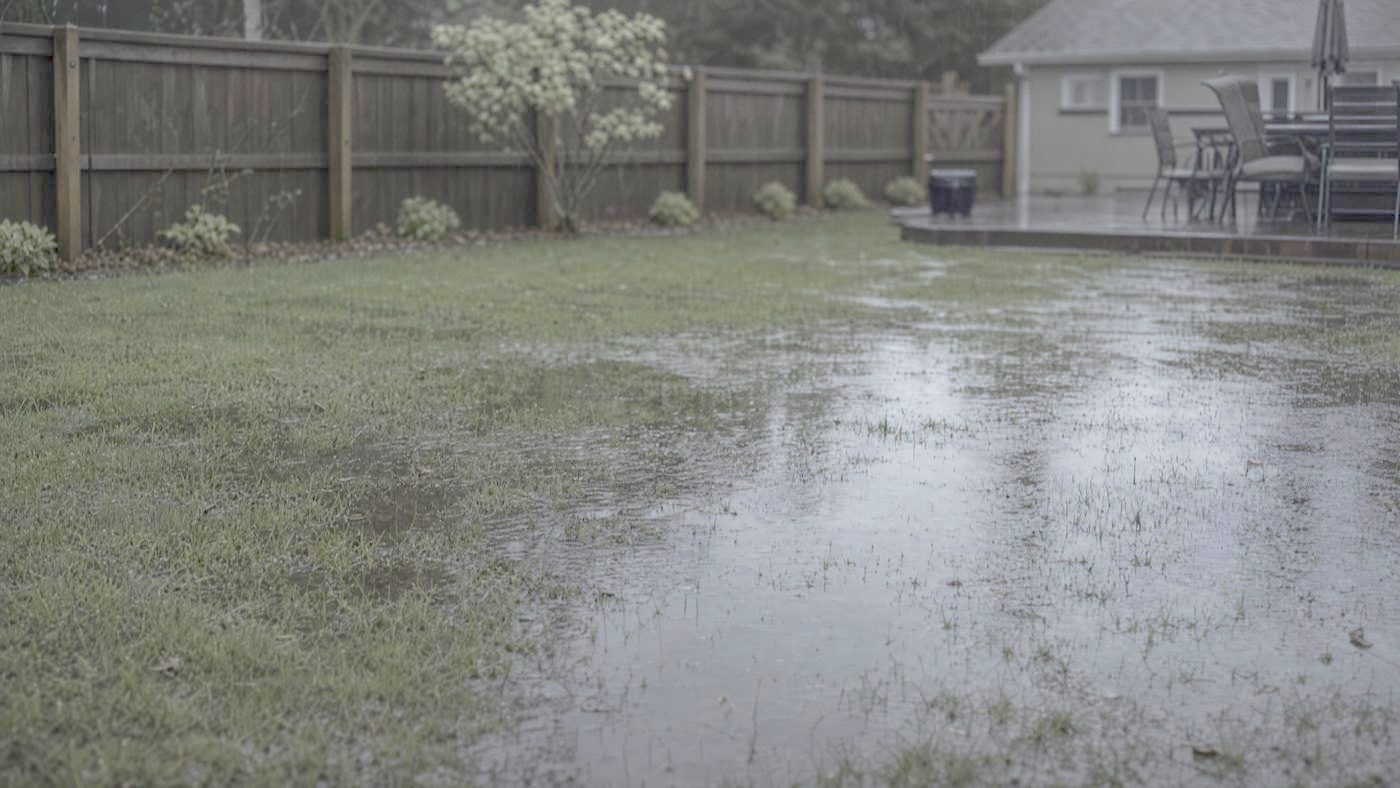
The drainfield is the part of your system that does the actual treatment, and it is the part that cannot be cleaned out and put back. That is why we spend real effort separating soil problems from tank problems before anyone talks about replacement.
The good news is that the distinction is usually knowable in an afternoon. The bad news is that by the time the symptoms are obvious in the yard, the field has generally been struggling for a while.
The mechanism: how a drainfield actually fails
Effluent leaving the tank runs through perforated laterals and soaks into the soil below. A thin black biological layer, the biomat, forms along the trench bottom and sidewalls, and it belongs there because it does the fine filtration. Aerobic bacteria living in the drier soil beneath the trench feed on that layer and keep it thin enough to pass water. The system stays in balance as long as the soil under the trench stays unsaturated.
Break that balance and the biomat thickens into a seal. It happens when the field gets more water than the soil can accept, when the water table rises into the trench and drowns the aerobic bacteria below, or when years of solids and grease carrying over from an unmaintained tank plaster the soil pores shut. Once the acceptance rate falls below the daily flow, effluent has nowhere to go and it either ponds in the trenches, rises to the surface, or backs up toward the house.
Tank problem or soil problem
Here is the diagnostic that matters most, and you can run half of it yourself. If a pump out fixes the backups and the house stays normal for years, the tank was the issue. If a pump out fixes it for a few days or a couple of weeks and the symptoms return, the tank was never the issue. You emptied a reservoir, the house refilled it, and the field still cannot take the water.
Symptoms that point at soil rather than the tank: wet, spongy ground in the strips above the laterals, a lush green stripe pattern in an otherwise ordinary lawn, effluent surfacing after heavy rain or at the end of a heavy use day, an outdoor sewage odor with no smell inside, and drains that are fine in May and troublesome in August. That seasonal pattern is a Northeast Florida signature and it points squarely at the water table.
What can still be repaired
Not every wet yard is a dead field, and this is where we would rather look than sell. A distribution box that has settled out of level sends the whole flow into one trench and starves the others, and re leveling it can bring the rest of the field back into service. A crushed or root filled lateral, a plugged header, or a collapsed section under a driveway is a repair, not a replacement. So is a downspout or an irrigation zone dumping clean water onto the field, which is an easy fix that gets missed constantly.
Load is repairable too. A leaking toilet flapper can add hundreds of gallons a day to a field that is right on the edge. Vehicles parked over the trenches compact the soil and crush chambers. In some cases a field that has been overloaded but not destroyed will recover partially if it is rested and the load is reduced. When the soil itself is done, though, it is done, and the honest answer is replacement, which is permitted work with a site evaluation and soil testing.
There is no additive, bacterial charge, chemical or aeration product that reliably restores a sealed drainfield, and we do not sell any of them. If someone offers you a bottle that renews your soil, keep your money. We also will not quote a drainfield repair or replacement over the phone, because the scope depends on the soil evaluation, the water table, the setbacks on your lot and what the existing system looks like once it is uncovered. And if we open your tank and find that the field is fine and the tank simply needed service, that is the invoice you get.
Questions
Related questions
Can a drainfield recover on its own?
How long should a drainfield last?
My yard is wet but the drains are fine. Is that a failure?
Does pumping the tank protect the drainfield?
Standing water does not wait
Tell us what is happening
Calling is faster than a form, and you get somebody who can ask the follow up question that actually narrows it down.