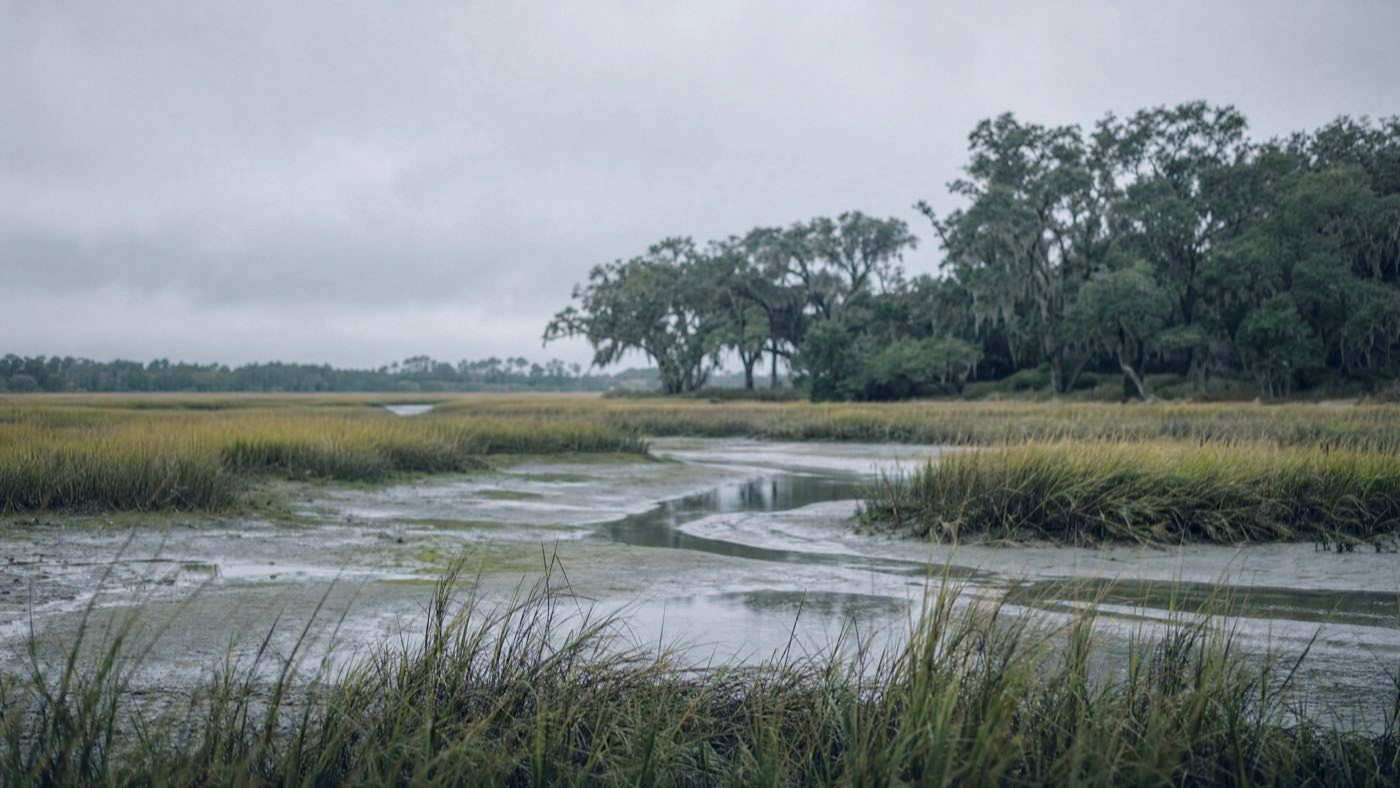
A site evaluation near the coast is answering a different question from one out toward Hastings or Elkton. Near the water the binding constraint is usually the seasonal high water table and the separation a system needs from it. Inland it is more often parcel layout, wells and setbacks.
Which authority handles the application is the first thing to establish.
What needs a permit
- New construction
- Tank or drainfield replacement
- Repairs beyond maintenance
- Additions that change rated flow
- Systems needing engineered or performance-based design
Sequence
How it usually goes
1
Evaluate the site
Water table separation is frequently the deciding factor here.
2
Design to the constraint
Which on some coastal lots means a mounded or engineered system.
3
Application
4
Inspection
Before cover.
Water table separation is the usual constraint
Florida requires a minimum separation between the bottom of a drainfield and the seasonal high water table. On low coastal lots that requirement, rather than lot size, is often what forces a mounded system and drives the cost of the project.
Questions
St. Johns County permit questions
Why would I need a mounded system?
Because the ground has to provide enough unsaturated depth below the drainfield to treat the effluent. Where the water table sits high, the field has to be raised to create it.
Does being near the Intracoastal change anything?
It affects the water table and it can affect setbacks from surface water.
Permitting is the long pole
Talk it through before you apply
We will tell you what applies to your parcel rather than what applies generally, and we will be straight when we do not yet know.