Home / Service areas / St. Johns County / Hastings
Septic service in Hastings
Farm properties do not use water the way a subdivision house does, and the ground around Hastings was engineered for crops rather than for effluent.
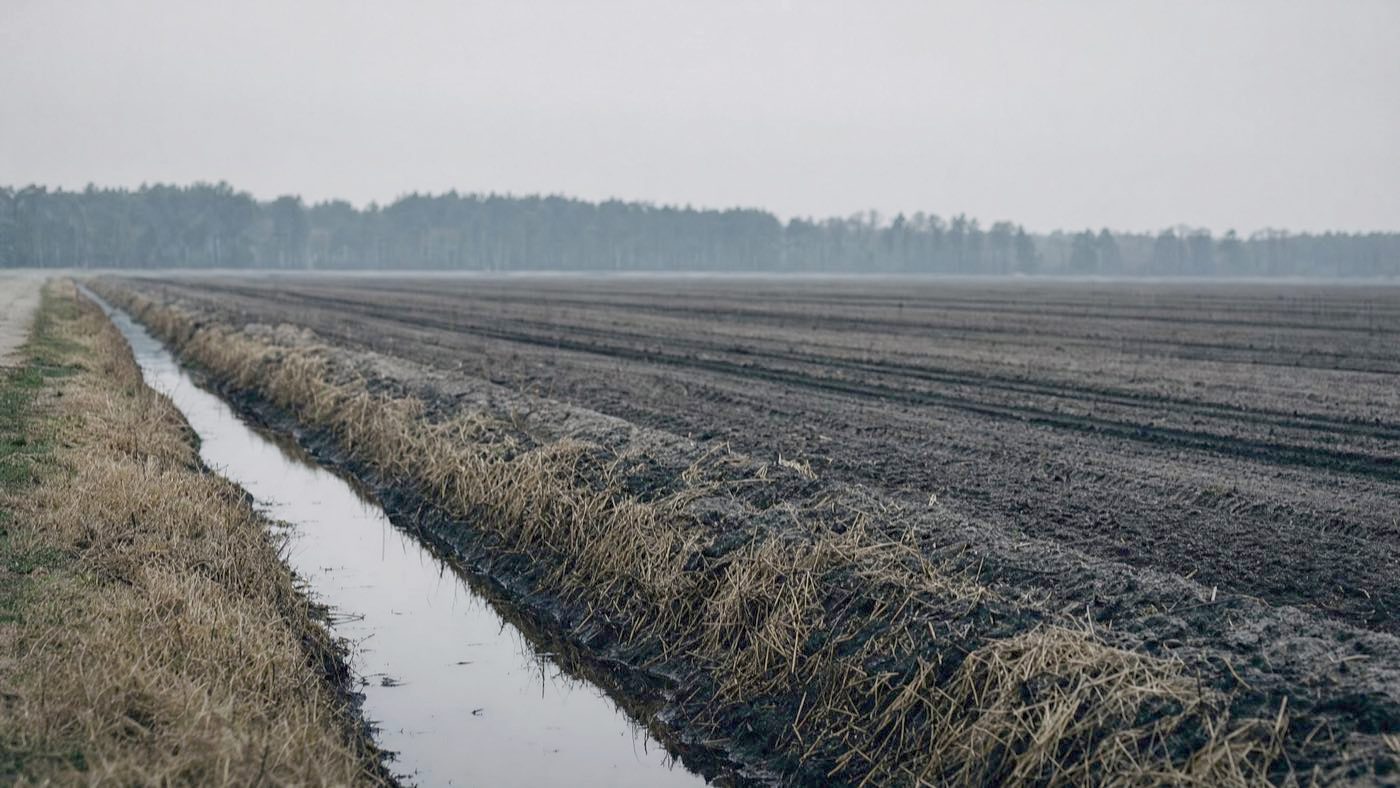
Hastings grew potatoes and cabbage because of what lies under the topsoil: a tight clay subsoil that holds moisture where roots can reach it instead of letting winter rain vanish into the aquifer. That is excellent for a crop and awkward for an absorption field, because the same layer that keeps water available to a potato also refuses to take liquid downward at any useful rate. On a good many parcels around here, a conventional system trenched into native ground is asking the soil to do something it was never going to do, and the honest fix involves filled or mounded design rather than a bigger tank.
The second factor is that the water table in the growing area is managed, not natural. A network of ditches and canals moves water off and onto these fields on a schedule that has nothing to do with your household, and when that stage comes up, the ground beneath your laterals comes up with it. If your system misbehaves at the same point every season, the calendar is usually telling you something the tank is not.
The Hastings pattern
What we usually find here
Design flow is an average, and farms do not live on averages
A permit sizes your system for a steady household. Planting and harvest bring extra people, extra showers and extra laundry into the same house for weeks at a time, and that surge shortens the settling time inside the tank so solids ride out toward the field. If your property loads seasonally, the service interval should follow the season, not the calendar year.
Wash water and shop waste do not belong in a household tank
Equipment rinse, produce wash and heavy grease will strip the biology out of a domestic tank and blind a field faster than anything a family can do. Those flows need their own handling. We would rather turn that work away and tell you to separate it than take the pumping call every few months forever.
Clay subsoil is why the crop thrives and the field struggles
When liquid cannot move down, it moves sideways and eventually up, which is why surfacing effluent in this area is so often a soil problem rather than a tank problem. Pumping clears the symptom for a week and changes nothing underneath.
Outbuildings collect plumbing over time
Barns, pack sheds and farmhands' quarters accumulate sinks, toilets and laundry hookups across decades, and it is common to find lines tied into whatever tank was closest at the time. Before you add anything, it is worth knowing what is already connected and what it is connected to.
Around town
Areas we cover
Services
Septic work in Hastings
- Septic Pump Outs in Hastings
- Septic Inspections in Hastings
- Drainfield Repair in Hastings
- Drainfield Replacement in Hastings
- Septic Installations in Hastings
- Emergency Septic Service in Hastings
- Septic Tank Replacement in Hastings
- Septic Tank Repair in Hastings
- Septic Tank Locating in Hastings
- Riser Installation in Hastings
- Camera Inspection in Hastings
- Hydro Jetting in Hastings
- Aerobic System (ATU) Service in Hastings
- Tank Abandonment in Hastings
- Lift Station Service in Hastings
- Grease Trap Cleaning in Hastings
- Commercial Septic Service in Hastings
Questions
Hastings questions
We have crew staying on the property through harvest. Should we pump more often?
Can I run the wash bay or produce rinse into the septic tank?
Standing water does not wait
Tell us what is happening
Calling is faster than a form, and you get somebody who can ask the follow up question that actually narrows it down.