Home / Service areas / Clay County / Keystone Heights
Septic service in Keystone Heights
Keystone Heights sits high and dry on deep sand at the south end of Trail Ridge, which hands you the opposite septic problem from most of northeast Florida.
The sand beneath this town, mostly Penney and Kershaw, is excessively drained, and groundwater can be six feet down or more. Percolation is not going to be your difficulty. Filtration is. The county soil survey says it plainly: limitations for absorption fields are slight, but because these sands filter poorly, contamination of groundwater becomes a hazard wherever systems are concentrated together. The great majority of homes here also drink from private wells drilled into that same sand. That, and not backed-up plumbing, is the real argument for keeping solids out of the field.
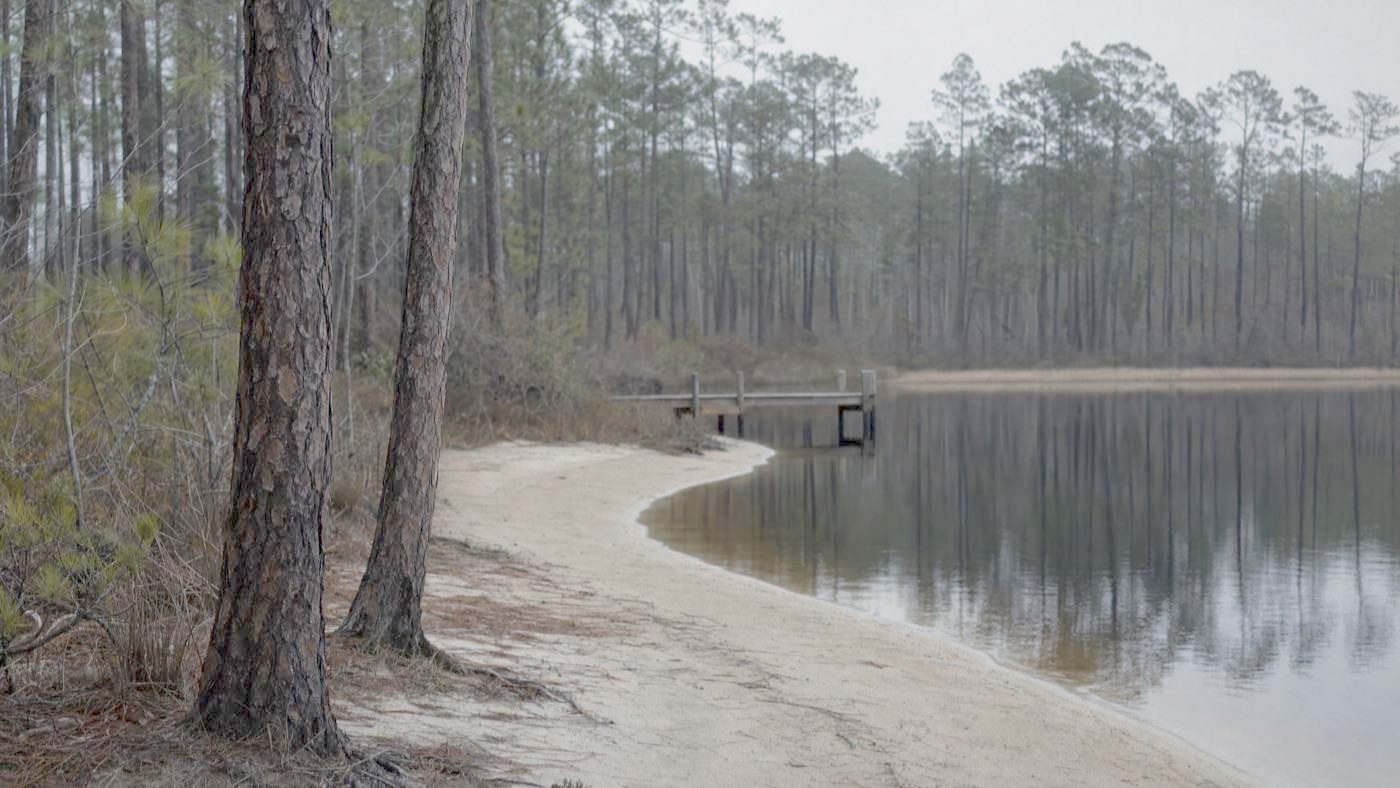
Then there are the lakes. Brooklyn and Geneva are sinkhole lakes with unusually high leakage down into the aquifer, and their surface has swung by tens of feet across the recorded period, among the widest ranges of any lakes in the state. A shoreline measured from during a long low decade can be a very long way inland by the time the water returns. Many lakefront parcels here were platted in the 1920s, which puts them under the older reduced setback from surface water and outside the modern minimum lot area, and a good number of them cannot physically hold a conventional field at all.
The Keystone Heights pattern
What we usually find here
Fast sand is not clean sand
Effluent travels through this soil quickly enough to reach groundwater with less treatment than the same tank would deliver in flatwoods. Rapid drainage feels like good news, and it is precisely why the tank has to keep doing its job.
Your well sits downgradient of something
Most homes here pair a private well with a private field on the same sandy parcel, sometimes several in a row along one road. Separation distance is the only thing standing between the two, so it is what we measure first.
Lots platted before 1972 follow older rules
Those parcels are held to a reduced minimum distance from surface water and are exempt from the current lot area floor, on the condition that the greatest practical distance is still maintained.
The shoreline is a moving target
These lakes have risen and dropped dramatically over the decades. A field permitted during low water can end up considerably closer to the lake than the permit ever contemplated, without anyone having done a thing wrong.
Around town
Areas we cover
Services
Septic work in Keystone Heights
- Septic Pump Outs in Keystone Heights
- Septic Inspections in Keystone Heights
- Drainfield Repair in Keystone Heights
- Drainfield Replacement in Keystone Heights
- Septic Installations in Keystone Heights
- Emergency Septic Service in Keystone Heights
- Septic Tank Replacement in Keystone Heights
- Septic Tank Repair in Keystone Heights
- Septic Tank Locating in Keystone Heights
- Riser Installation in Keystone Heights
- Camera Inspection in Keystone Heights
- Hydro Jetting in Keystone Heights
- Aerobic System (ATU) Service in Keystone Heights
- Tank Abandonment in Keystone Heights
- Lift Station Service in Keystone Heights
- Grease Trap Cleaning in Keystone Heights
- Commercial Septic Service in Keystone Heights
Questions
Keystone Heights questions
The sand here drains beautifully. Why would I ever need pumping?
Can I put a drainfield on my lakefront lot?
Standing water does not wait
Tell us what is happening
Calling is faster than a form, and you get somebody who can ask the follow up question that actually narrows it down.